By Daniel Buckwalter
There were flickers of doubt in my mind: Could a Paul McCartney-driven oratorio make sense without gimmicks of any sort? Can this be classical music?
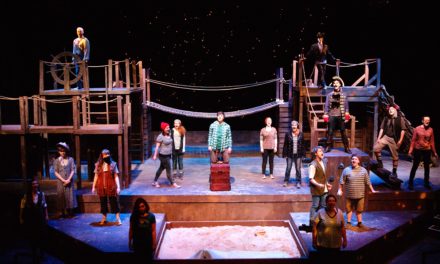
The pleasantly surprising answer was a qualified “yes,” as the Eugene Concert Choir and Concert Choir Orchestra — along with the Anaheim, California-based All-American Boys Chorus — proved on May 17 before a large and appreciative audience in the Hult Center’s Silva Concert Hall, the final production of the season for the choir.
Under the direction of Diane Retallack, Eugene Concert Choir explored McCartney’s life in the loosely autobiographical Liverpool Oratorio, an eight-movement piece which McCartney composed with the late Carl Davis and which premiered in 1991 at the Liverpool Anglican Cathedral.
Liverpool Oratorio was McCartney’s first foray into classical music, and it has received mixed reviews over the years, some praising its lavish orchestration and rich melodies with others believing the work overwrought, simplistic, and insubstantial.
Both sides have their points. The reason I was pleasantly surprised listening to the piece on a Sunday afternoon was that McCartney, in his first effort as a classical composer, made every effort to delve into the purity of this genre.
There were no clever, attention-grabbing devices of any form. Most of all, there was no mention of The Beatles or the group’s worldwide impact, nor his vast commercial success as a solo artist.
Instead, there was the unsparing look back on his life as the character Shanty (sung by tenor Charles Calotta), born during World War II, and proceeding through schooling and the death of his father — a variation from McCartney’s real life in that his father died in 1976 while his beloved mother had died of breast cancer when the boy was 14; many theorize that her death is still too painful for McCartney to talk or write about.
And, of course, there is his 29-year marriage — love affair, really, albeit presented in the oratorio as shaky at the start — to Linda (known as Mary Dee in the oratorio and sung by soprano Katie Van Kooten). McCartney, in particular, has some maturing to do, and this is another example of the unsparing look at his life. He is not the hero of his story.
Bass-baritone Christian Simmons and mezzo-soprano Guadalupe Paz rounded out the soloists for what was, overall, a fine way for Eugene Concert Choir to end its year.